Ciência
Células cerebrais especializadas podem ser chave para remover proteínas do Alzheimer
 Reprodução
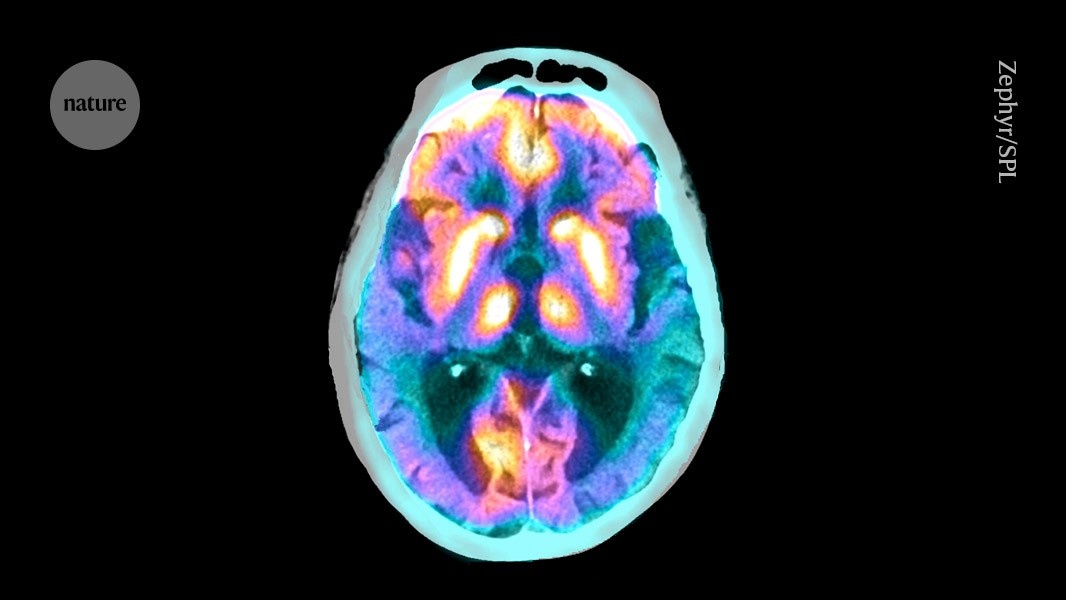
Credit: Zephyr/Science Photo Library
A group of specialized cells play a crucial part in clearing toxic proteins from inside the brain1. But in people with Alzheimer’s disease, these cells malfunction, leading to the build up of tau proteins — a hallmark of the disease.
Tanycytes, specialized cells that line the third ventricle of the brain, are unique because they are in direct contact with both the bloodstream and the cerebrospinal fluid (CSF). This means that they can circumvent the blood–brain barrier to allow molecules into and out of the brain. “Tanycytes are highways for the brain,” says Vincent Prévot, a neuroendocrinologist based in Paris at Inserm, the French National Institute of Health and Medical Research.
Although it was known that tanycytes transport molecules into the CSF, Prévot and his colleagues are the first to show that tanycytes also transport molecules out of the CSF. In particular, they move tau proteins from the CSF surrounding the brain into the bloodstream.
The findings are fascinating, says Amy Brodtmann, a cognitive neurologist and researcher at Monash University in Melbourne, Australia. “No one has looked at these cells before” in relation to Alzheimer’s disease, she adds. The works shows a potential explanation for how abnormal tau proteins accumulate in the brain, she adds.
Tau proteins usually help to support the internal structure of cells and make them stronger, including cells in the brain. But in people with Alzheimer’s disease, the protein stops working properly. Brodtmann says tau then becomes “sticky”, forming clumps in the cells and causing them to die. These tau tangles tend to accumulate in regions of the brain that are involved in memory.
The researchers first discovered that tanycytes can transport and release tau in cell-based experiments. They then injected human tau proteins connected to a fluorescent tag into the CSF of mice to see where the proteins went.
Prévot says he was surprised to discover that tau could only be detected in tanycytes, and that the tanycytes transported the protein from the CSF into the pituitary gland and then into the bloodstream. In mice with impaired tanycytes, the researchers observed an accumulation of tau in the brain, and low levels of the protein in the bloodstream. This suggested to him that tanycytes are important for removing tau from the brain and that they could play a part in the build up of the protein.
The researchers compared CSF and blood samples taken from 86 people with the disease and 91 people without. They found that less tau had moved from the CSF to the bloodstream in people with Alzheimer’s compared with people who did not have the disease. This suggested that in people with the disease, tanycytes were not working properly. In particular, the team found less of an abnormal type of tau protein called p-tau181, which is associated with Alzheimer’s disease, in the blood than in the CSF.
In an analysis of postmortem brain-tissue samples, the researchers observed that tanycytes in people with the disease were destroyed or fragmented compared with people without the disease. “It’s like you had taken some scissors and cut them 100 times,” Prévot says.
doi: https://doi.org/10.1038/d41586-026-00747-x
Sauvé, F. et al. Cell Press Blue 1, 100003 (2026).
Article
Google Scholar
Reprints and permissions
Cancer might protect against Alzheimer’s — this protein helps explain why
How common is Alzheimer’s? Blood-test study holds surprises
Blood test holds promise for predicting when Alzheimer’s symptoms will start
Alzheimer’s decline slows with just a few thousand steps a day
Human brain organoids reveal new path for Alzheimer’s drugs
Alzheimer’s Drugs Are Finally Tackling the Disease Itself. Here’s How
This compound enhances long-term memory of mice — but only in females
Brains of ‘super agers’ are strong producers of new neurons
Immune cells from the gut drive development of Parkinson’s disease in the brain
News & Views 04 FEB 26
‘Giant step forward’ for Huntington’s — the scientist behind the first gene therapy
News Feature 08 DEC 25
iPEX enables micrometre-resolution deep spatial proteomics via tissue expansion
The Chinese University of Hong Kong, Shenzhen - School of Science and Engineering
Molecular Mechanisms and Neural Circuits of Fear Memory, Maternal and Social Behavior. A recent PhD in molecular biology / neuroscience.
Piscataway, New Jersey
Rutgers University Shumyatsky lab
Job Title: Reporter, Nature Location: Washington DC or New York (Hybrid Working Model) Application Deadline: March 27, 2026 About Springer Nature...
New York City, New York (US)
The University of Texas MD Anderson Cancer Center
Eleven New Professor-Level Research Positions Opened for Female Candidates at Tohoku University
Sign up for the Nature Briefing newsletter — what matters in science, free to your inbox daily.
Thank you for visiting nature.com. You are using a browser version with limited support for CSS. To obtain
the best experience, we recommend you use a more up to date browser (or turn off compatibility mode in
Internet Explorer). In the meantime, to ensure continued support, we are displaying the site without styles
and JavaScript.
Fonte:
Nature-Notícias (Novo)