Ciência
Baterias de veículos elétricos se fortalecem para enfrentar o calor
 Reprodução
Thank you for visiting nature.com. You are using a browser version with limited support for CSS. To obtain
the best experience, we recommend you use a more up to date browser (or turn off compatibility mode in
Internet Explorer). In the meantime, to ensure continued support, we are displaying the site without styles
and JavaScript.
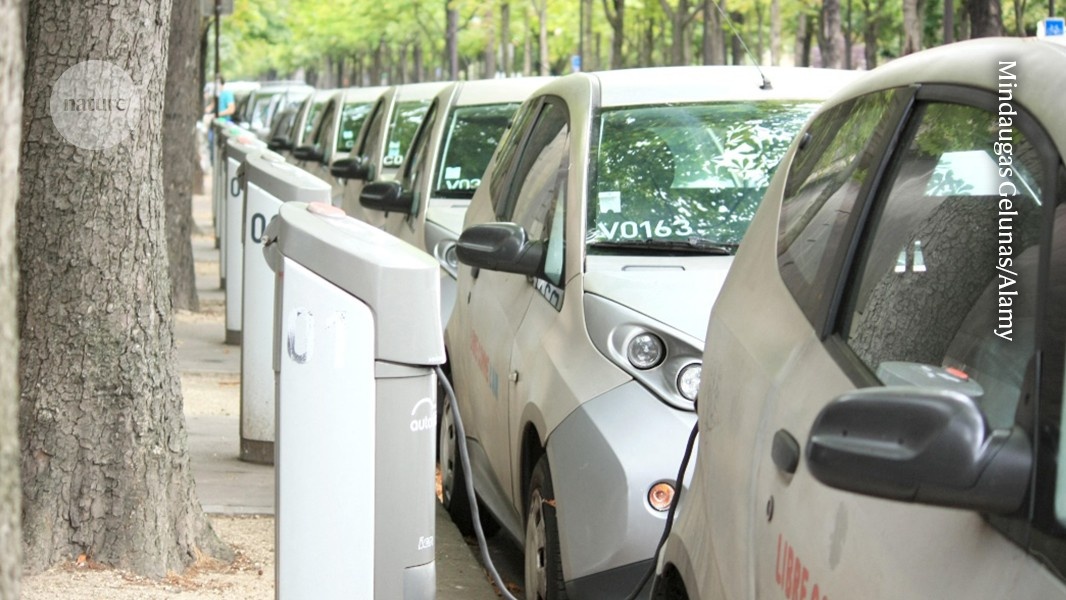
Lithium-ion batteries produced in 2019–23 fare better at higher temperatures than do those made in 2010–18. Credit: Mindaugas Gelunas/Alamy
Improvements in battery quality will help electric vehicles (EVs) to keep up with the tough conditions imposed by global warming1.
Access Nature and 54 other Nature Portfolio journals
Get Nature+, our best-value online-access subscription
Subscribe to this journal
Receive 51 print issues and online access
Rent or buy this article
Prices vary by article type
Prices may be subject to local taxes which are calculated during checkout
doi: https://doi.org/10.1038/d41586-026-00670-1
Wu, H., Chen, J., Vaishnav, P., Sun, M. & Craig, M. T. Nature. Clim. Change https://doi.org/10.1038/s41558-026-02579-z (2026).
Article
Google Scholar
Can the clean-energy revolution save us from climate catastrophe?
News Feature 11 FEB 26
Sub-zero Celsius elastocaloric cooling via low-transition-temperature alloys
Seven feel-good science stories to restore your faith in 2025
The Chinese University of Hong Kong, Shenzhen - School of Science and Engineering
Molecular Mechanisms and Neural Circuits of Fear Memory, Maternal and Social Behavior. A recent PhD in molecular biology / neuroscience.
Piscataway, New Jersey
Rutgers University Shumyatsky lab
Job Title: Reporter, Nature Location: Washington DC or New York (Hybrid Working Model) Application Deadline: March 27, 2026 About Springer Nature...
New York City, New York (US)
The University of Texas MD Anderson Cancer Center
Eleven New Professor-Level Research Positions Opened for Female Candidates at Tohoku University
Sign up for the Nature Briefing newsletter — what matters in science, free to your inbox daily.
Fonte:
Nature - Medicina